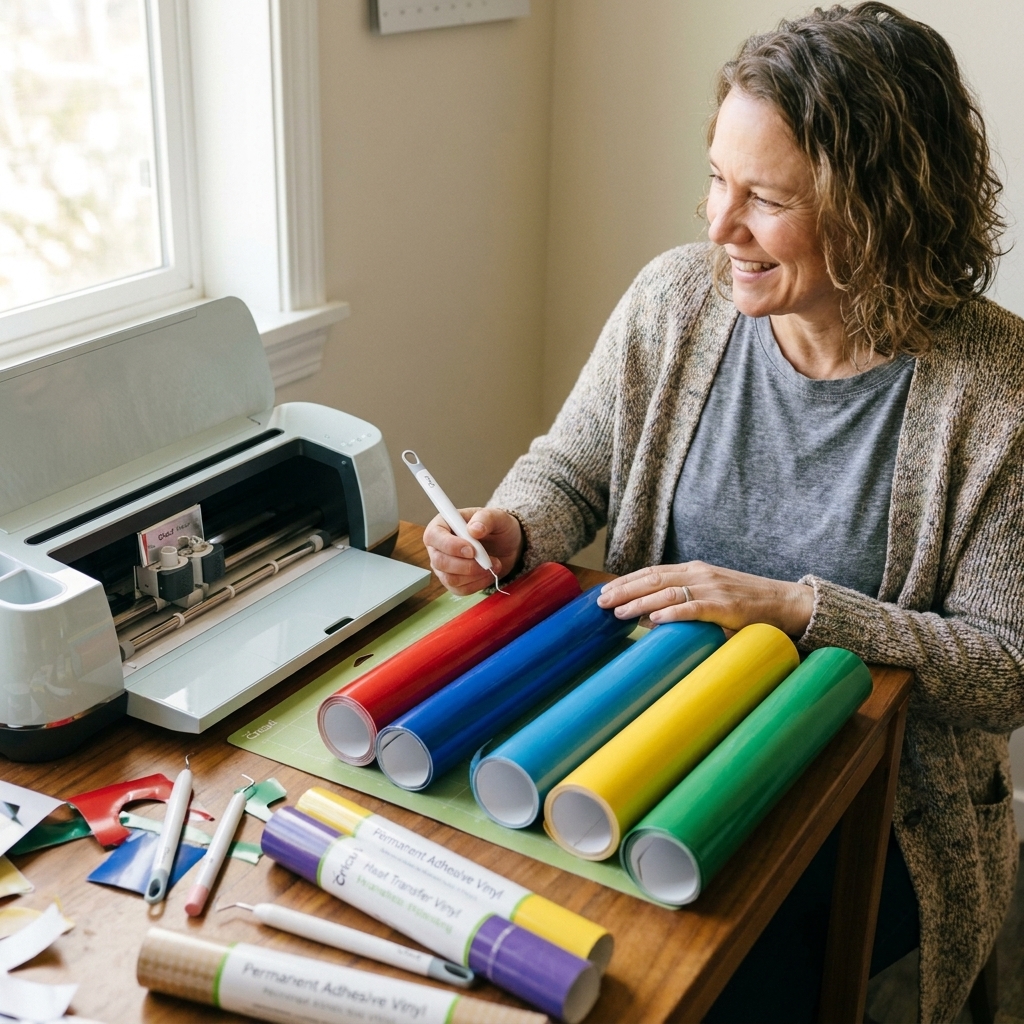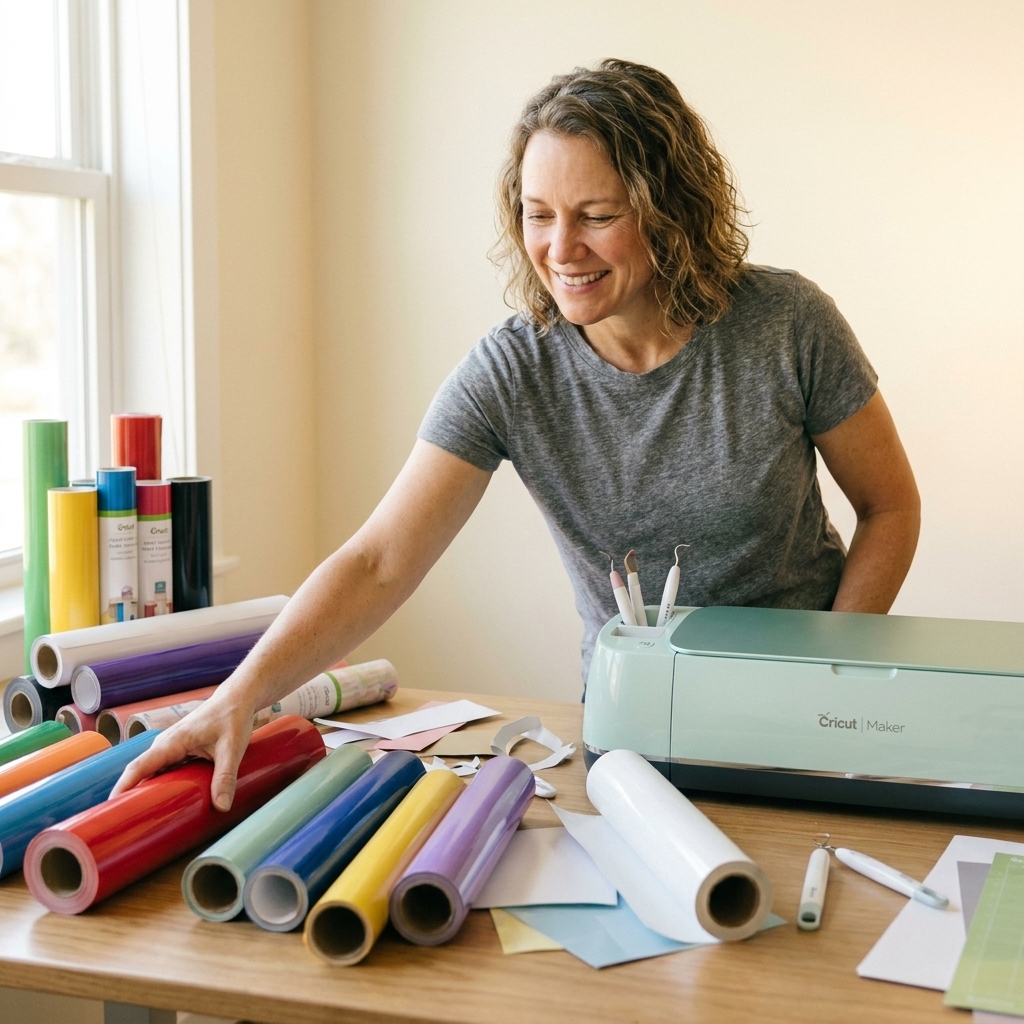
A beginner-friendly guide to removable, permanent, and iron-on vinyl for Cricut. Learn which vinyl to choose, how to apply it, and how to avoid common mistakes.
Maker Vinyl
Updated October 17, 2026
HTV vs. Permanent Adhesive Vinyl
Not sure if you need HTV or permanent adhesive vinyl for your Cricut project? Learn the differences, best surfaces for each, and exactly when to use which so you stop wasting materials.

Harper Davis
Harper Davis is a lifelong DIY enthusiast and cutting-machine expert who loves helping beginners conquer Cricut Design Space. With over six years of experience running a custom vinyl shop, she shares practical tutorials, material guides, and creative inspiration.
If you have ever stood in your craft room holding a roll of vinyl like it is a tiny, sticky mystery, you are not alone. I have run a vinyl shop for years and I still see the same mix-up from beginners (and honestly, tired parents crafting at midnight): HTV (heat transfer vinyl) and permanent adhesive vinyl look similar on the roll, but they behave totally differently once you try to apply them.
This guide will help you pick the right material the first time, based on the surface you are decorating, how the item will be used, and what tools you actually need.
The quick rule
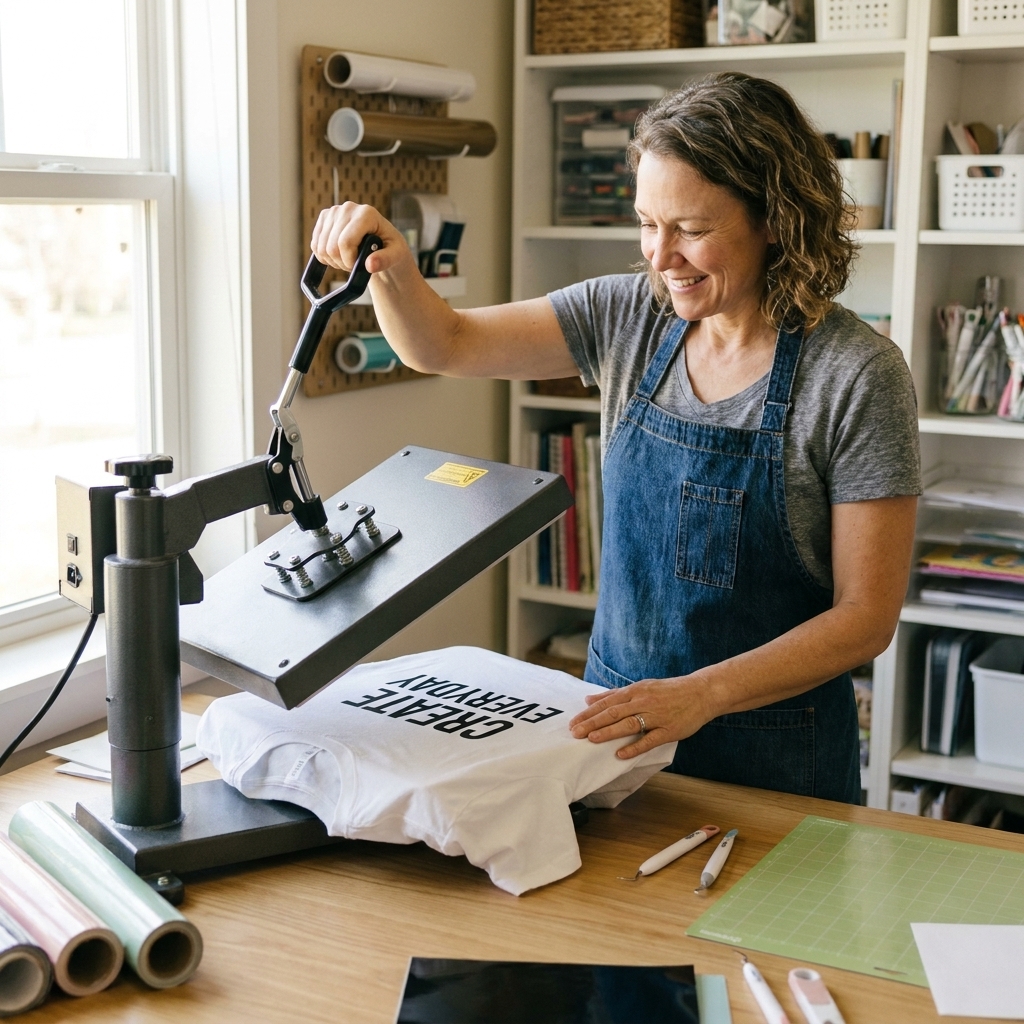
Use HTV when the surface is fabric or anything that can safely take heat. HTV is made to be fused to the material with heat and pressure.
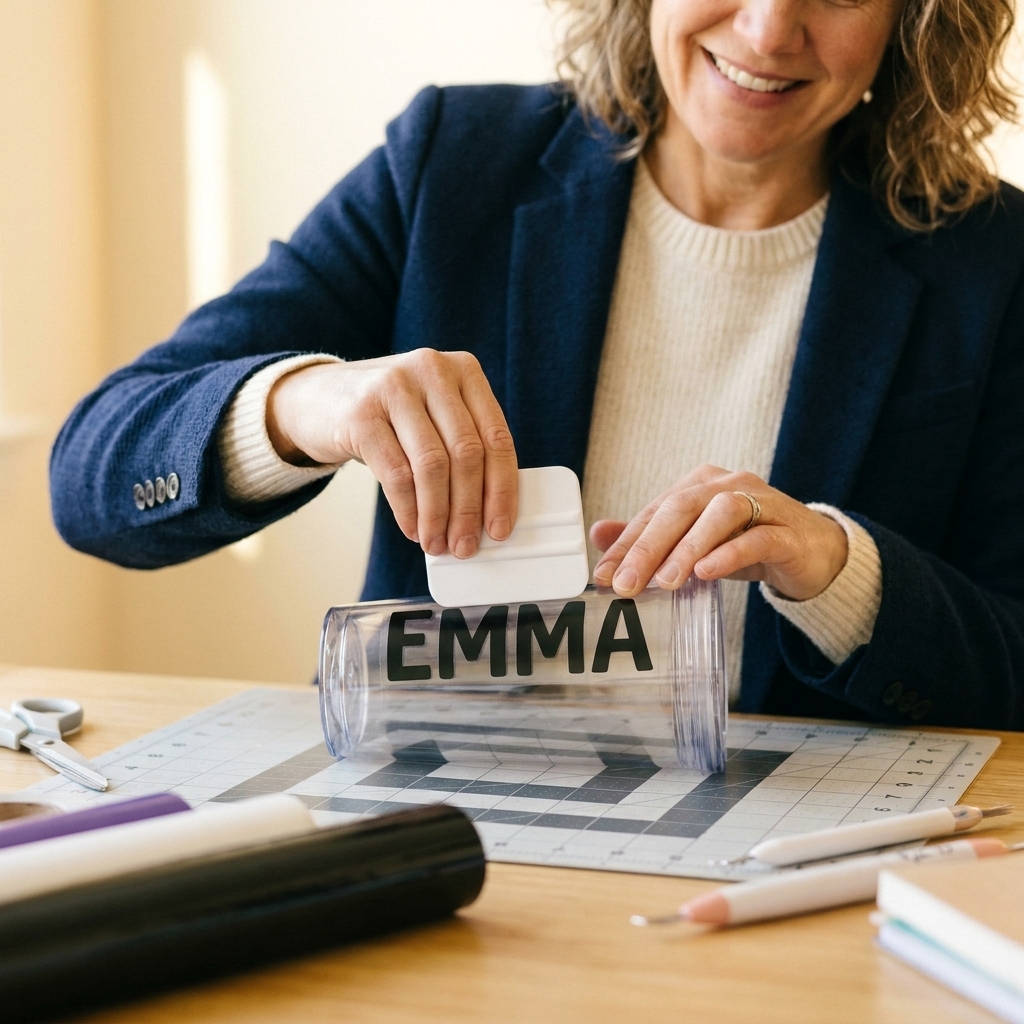
Use permanent adhesive vinyl when the surface is smooth and hard. Think tumblers, mugs, car decals, signs, and glass. It sticks like a sticker and is burnished down with a scraper.
If you only remember one thing: HTV is heat-activated and usually goes on fabric. Permanent vinyl is pressure-applied and goes on hard surfaces.
What is HTV?
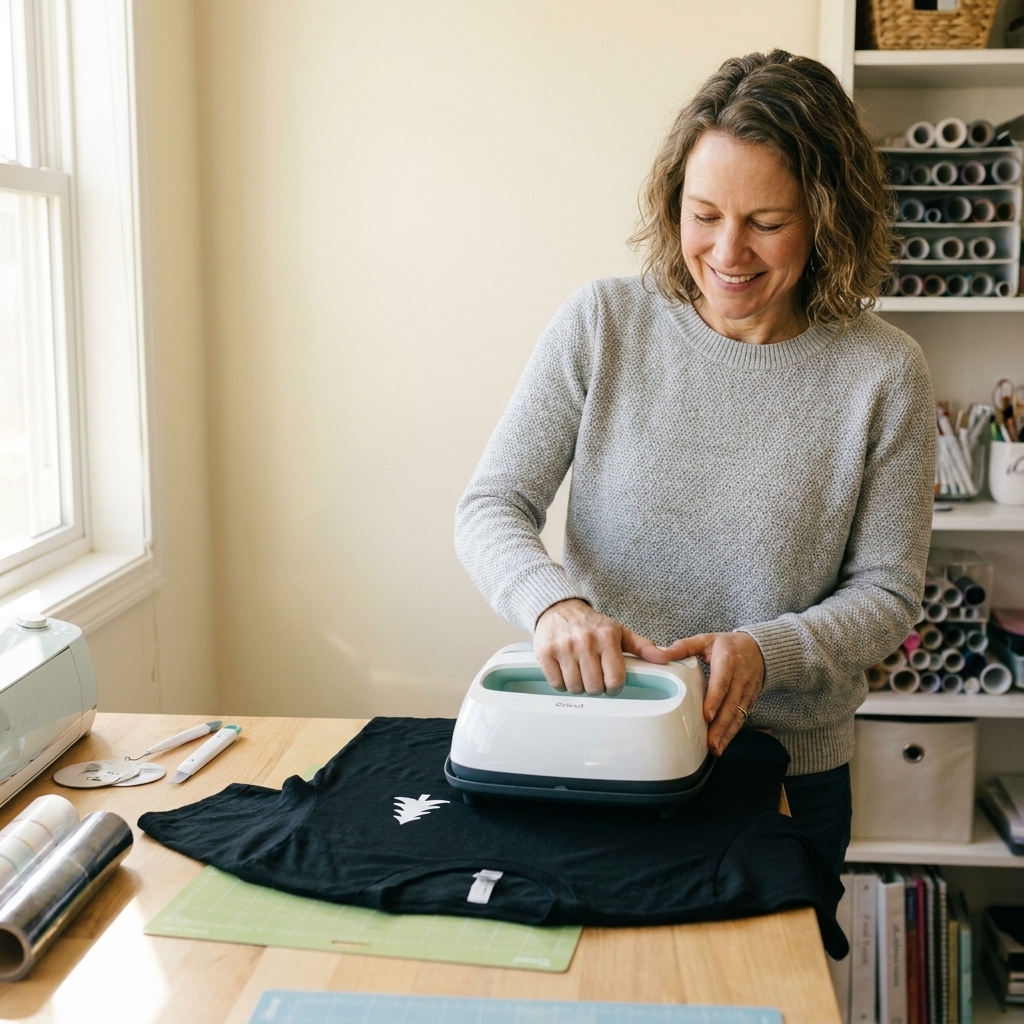
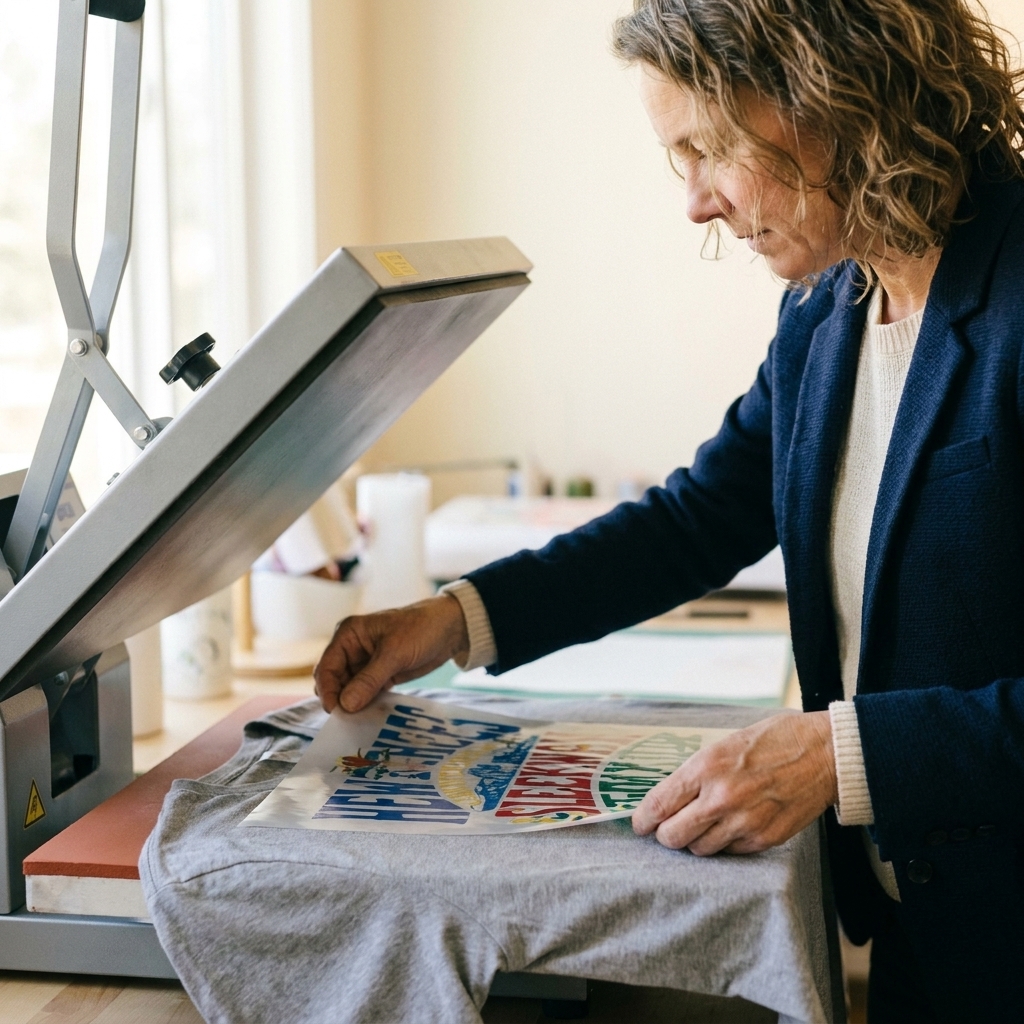
HTV is a vinyl film with a heat-activated adhesive. You cut your design, weed it, and then press it onto your blank using a Cricut EasyPress or heat press. HTV comes attached to a clear carrier sheet (often called a carrier or liner), which is what you use to move the design from your cutting mat to your project.
Best surfaces
- 100% cotton shirts, hoodies, onesies, tote bags
- Cotton blends and many polyester garments (using the correct temp and press time)
- Canvas, denim, and some faux leather (always test)
- Wood and paper crafts that can handle heat (with extra care)
When it shines
- You want a soft, integrated look that feels like part of the fabric
- The item will be washed repeatedly (shirts, uniforms, sports bags)
- You need specialty finishes like glitter, puff, flock, holographic, reflective, or stretch HTV
Tools you will use
- Weeding tool
- Heat press or Cricut EasyPress (an iron can work, but it is harder to get consistent results)
- Heat-resistant tape (helpful for tricky placements)
- Teflon sheet or butcher paper (to protect your press and project)
Two success tips
- Pre-press your blank for a few seconds to flatten wrinkles and remove moisture (especially on cotton).
- Skip the ironing board. A firm pressing mat or heat press pad gives you better pressure and fewer peeling edges.
What is permanent adhesive vinyl?
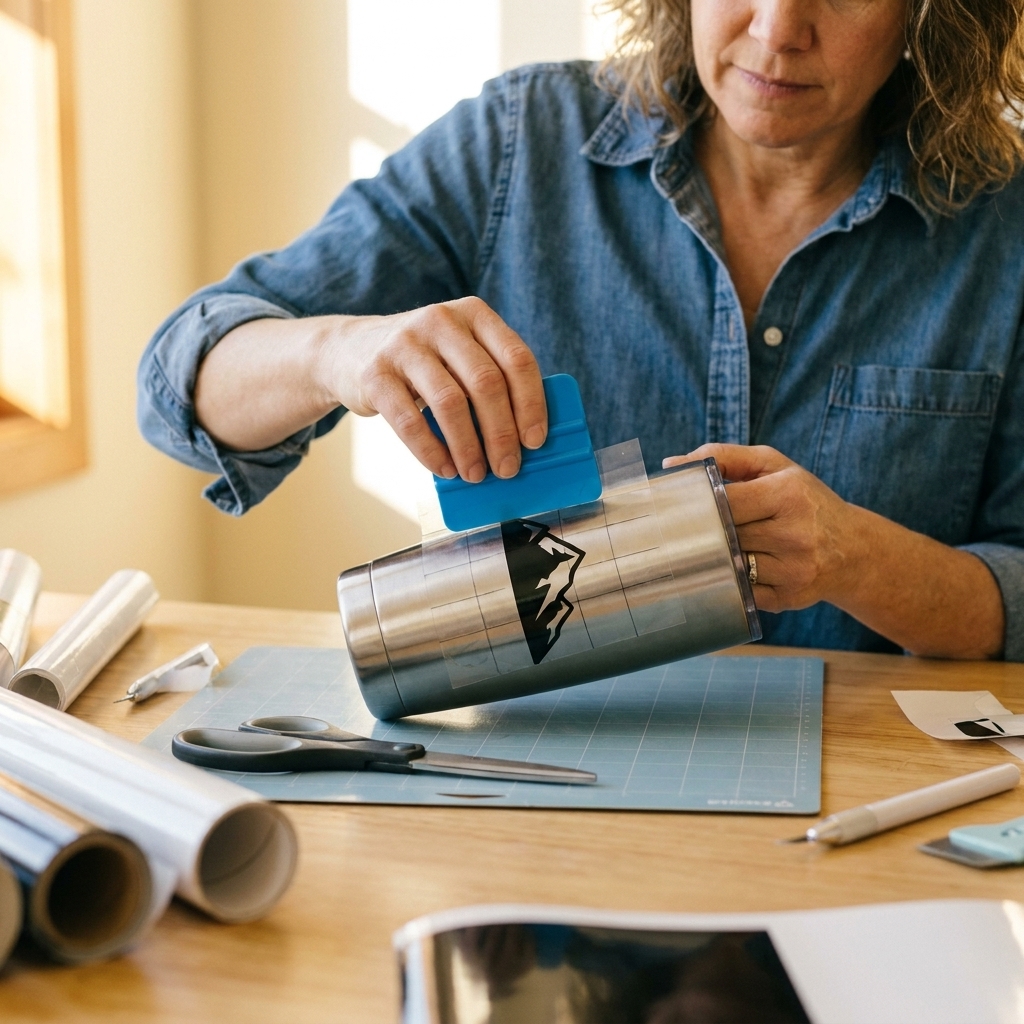
Permanent adhesive vinyl is a thin vinyl film with pressure-sensitive adhesive. You cut it, weed it, then transfer it to your surface using transfer tape (for most designs). Once it is on, you burnish it down with a scraper so the adhesive bonds well.
“Permanent” does not mean indestructible forever. It means the adhesive is stronger than removable vinyl and is intended for longer-term use.
Best surfaces
- Glass (mirrors, jars, windows)
- Smooth plastics (tumblers, storage bins, acrylic blanks)
- Painted metal (mailboxes, some outdoor signs)
- Sealed wood (raw wood is tricky, more on that below)
- Ceramic mugs (hand-wash recommended unless you use a method designed for dishwashers)
When it shines
- You want crisp decals and lettering for hard goods
- You are making labels for pantry jars or organizing bins
- You need outdoor durability (with the right brand and proper surface prep)
Tools you will use
- Transfer tape (standard or strong grip depending on vinyl finish)
- Scraper or squeegee
- Isopropyl alcohol and a lint-free cloth for cleaning surfaces
Key differences
1) How it sticks
- HTV: Heat-activated adhesive softens and bonds into and around fibers (or bonds to the surface) under heat and pressure.
- Permanent vinyl: Pressure-sensitive adhesive grabs the surface and typically builds strength over time. Many projects reach a strong bond in about 24 to 72 hours, but check your vinyl brand and the surface you are applying to.
2) Which side you cut
- HTV: You cut mirrored and cut with the shiny carrier sheet side down (your machine cuts the vinyl from the back).
- Permanent vinyl: You cut not mirrored (cut as-is) with the vinyl side up, then use transfer tape to move it.
3) What you weed
- HTV: Weed away the parts you do not want, leaving the design stuck to the carrier sheet.
- Permanent vinyl: Weed away the parts you do not want, then place transfer tape on top to pick up the design.
4) Durability in real life
- HTV: Excellent through repeated washing when pressed correctly. Not a great choice for items exposed to high heat later (like a dishwasher cycle), unless it is on fabric.
- Permanent vinyl: Great for smooth hard surfaces. Outdoors, durability depends on brand (cast vs calendared), exposure, and prep. On curved items, thin decals can lift if not burnished well.
5) How it feels
- HTV: Can feel smooth, stretchy, or textured depending on type. Often blends into fabric.
- Permanent vinyl: Feels like a decal sitting on top of the surface.
What to use
T-shirts and onesies
Use HTV. If it is wearable fabric, HTV is your best friend.
Canvas tote bags
Use HTV for the most durable result. Permanent vinyl can crack or peel on fabric, especially after washing.
Water bottles and tumblers
Use permanent adhesive vinyl. Clean the surface well, burnish firmly, and let it sit before heavy use. Many decals reach their best bond after 24 to 72 hours (brand and surface matter). Hand-washing will keep decals looking nicer longer.
Ceramic mugs
Use permanent adhesive vinyl for decorative mugs. Keep the decal away from the rim and any area where lips will touch. Hand-wash is the safest bet for most craft vinyl. If you need true dishwasher durability, look at options designed for that job (like sublimation on sublimation-coated mugs, or professional-grade processes).
Car decals
Use permanent adhesive vinyl rated for outdoor use (many crafters prefer cast vinyl for vehicles). Clean the area thoroughly and apply when temperatures are mild. Expect better longevity from higher-quality outdoor vinyl.
Wood signs
Usually permanent vinyl works well on painted and fully cured wood, or wood that is sealed smooth. On raw wood, vinyl can struggle because the grain creates tiny air gaps.
Leather and faux leather earrings
This can be either, depending on the blank and finish. Many crafters use HTV on faux leather with lower heat and careful testing. If the surface is smooth and firm, permanent vinyl can work too, but edges may lift on flexible pieces.
Surface guide
Use HTV on
- Fabric and textiles
- Items that flex a lot
- Projects you want to withstand repeated washing
Use permanent vinyl on
- Glass, acrylic, plastic, metal
- Smooth sealed surfaces
- Dry, clean, non-textured items
Common mismatches
- Permanent vinyl on shirts: It can look okay for photos or short-term wear, but it tends to crack and peel after regular wear and washing.
- HTV on drinkware: Standard craft HTV is not intended for wet handling, curved edges, and constant washing. If you want a vinyl-like look on tumblers, use a product specifically rated for drinkware (and follow its instructions).
- Permanent vinyl on textured walls: You want removable vinyl for walls, and even then texture can be a problem.
- Any vinyl on dusty, greasy, or silicone-coated surfaces: If water beads up or the surface feels slick, clean more or pick a different blank.
Vinyl types at a glance
If you are newer to all of this, here is the simplest way to keep the categories straight:
- HTV: heat + pressure, usually for fabric.
- Permanent adhesive vinyl: pressure-applied decals for hard surfaces.
- Removable vinyl: like permanent vinyl, but easier to remove (popular for walls and temporary decor).
- Printable vinyl or sticker paper: made for printing, then sticking (great for stickers and labels, but durability varies a lot by brand).
- UV DTF wraps: a different product entirely, often used for drinkware without heat. People confuse it with “vinyl” because it looks similar on finished projects.
Beginner mistakes
Mistake 1: Forgetting to mirror HTV
If your design is words, mirror it before cutting. If you forget, you will end up with backwards text. I have made that mistake more times than I want to admit, usually late at night.
Mistake 2: Using transfer tape on HTV
HTV already has its own carrier sheet. Transfer tape is for adhesive vinyl.
Mistake 3: Pressing too lightly (HTV)
HTV needs firm pressure and the right temperature for the material. If it peels up after pressing, it often needs more pressure, a few more seconds, or a second press from the back.
Mistake 4: Applying permanent vinyl without cleaning
Oils from your hands and residue from manufacturing are decal killers. Wipe with isopropyl alcohol, let it fully dry, then apply.
Mistake 5: Not letting adhesive vinyl sit
Pressure-sensitive adhesive tends to build strength over time. If you apply a decal and immediately wash or scrub it, you are setting yourself up for lifting edges.
Quick fixes
HTV problems
- Peeling edges: Not enough pressure or time. Press again and consider a quick press from the back.
- Carrier will not release: Wrong peel temp (hot vs warm vs cold) or not enough press. Check the brand directions.
- Scorch marks: Too much heat or time. Use a protective sheet and lower temp if your blank allows it.
Adhesive vinyl problems
- Lifting on tumblers: Surface not cleaned, decal washed too soon, not enough burnish, or a textured or powder-coated finish.
- Bubbles: Apply slowly and burnish from the center out. Small bubbles often settle after a day.
- Transfer tape will not pick up vinyl: Try a stronger grip tape or burnish more before lifting.
Choosing within each type
HTV types
- Everyday/standard HTV: Great for most cotton and blends.
- Stretch HTV: Best for athletic wear, leggings, and spandex blends.
- Glitter HTV: Thicker and needs a bit more pressure. Gorgeous for kid shirts and spirit wear.
- Metallic and holographic HTV: Stunning, but can show press marks if you overheat. Use a protective sheet.
Adhesive vinyl types
- Permanent: Stronger bond, best for long-term decals.
- Removable: Ideal for walls, temporary signage, seasonal decor.
- Outdoor-rated: Look for durability notes from the manufacturer if it will live in sun and weather.
FAQ
Can I use permanent vinyl on fabric if I never wash it?
You can, but I do not recommend it. Fabric flexes and moves, and the adhesive is not designed to bite into fibers. If you want vinyl on fabric, HTV is the right choice even for items you will not wash often.
Can I use HTV on wood?
Sometimes, yes. If the wood is smooth and sealed, HTV can adhere beautifully, especially for decorative signs. The risk is scorching, warping, or uneven adhesion from wood grain. Test first and use a protective sheet.
What about sticker paper?
Sticker paper is its own material, usually paper or vinyl-based printable sheets with adhesive backing. It behaves more like adhesive vinyl than HTV because it is pressure-applied, but it has different durability and water resistance depending on the brand and finish.
Why is my permanent vinyl lifting on a tumbler?
The most common causes are: the surface was not cleaned well, the vinyl was not burnished firmly enough, the decal was washed too soon, or the tumbler has a powder-coated or textured finish that gives the adhesive less contact.
Why is my HTV peeling after pressing?
Usually it is one of three things: not enough heat, not enough pressure, or not enough time. Double-check your settings for your exact HTV brand and blank type, and press again if needed. If the carrier sheet will not release cleanly, it often needs a bit more pressing.
Decision checklist
- Is it fabric or stretchy? Choose HTV.
- Is it smooth, hard, and non-porous? Choose permanent adhesive vinyl.
- Will it be washed a lot? HTV for fabric items, permanent vinyl for hard goods with gentle washing and enough time to build bond strength.
- Does it have texture? Vinyl in general struggles on texture. Consider paint, engraving, or sublimation-style options instead.
If you are unsure, focus on two details: the surface (fabric vs hard) and the abuse (washing, heat, friction). Get those right and you will stop burning through expensive materials and start keeping the fun part fun.